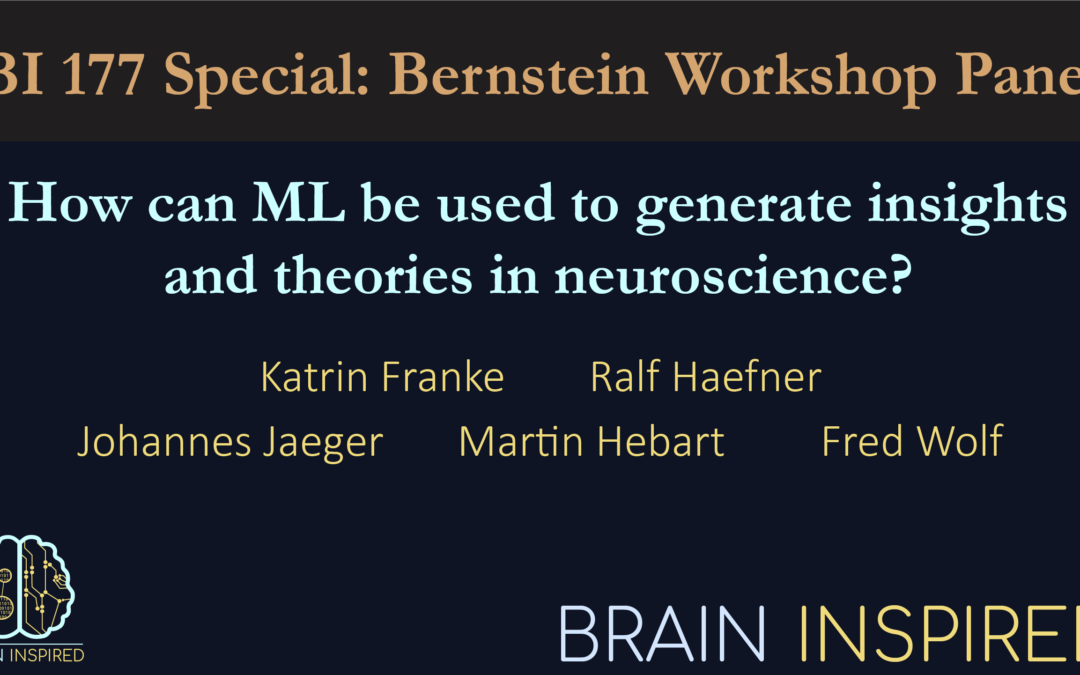
I was recently invited to moderate a panel at the Annual Bernstein conference – this one was in Berlin Germany. The panel I moderated was at a satellite workshop at the conference called How can machine learning be used to generate insights and theories in neuroscience? Below are the panelists. I hope you enjoy the discussion!
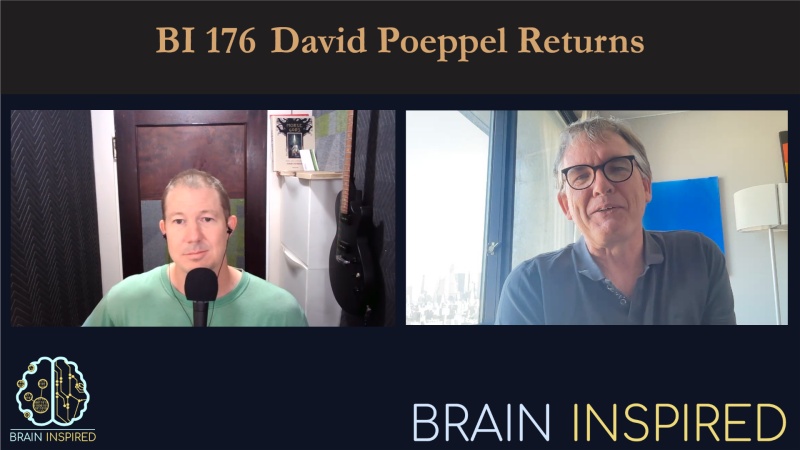
David runs his lab at NYU, where they study auditory cognition, speech perception, language, and music. On the heels of the episode with David Glanzman, we discuss the ongoing mystery regarding how memory works, how to study and think about brains and minds, and the reemergence (perhaps) of the language of thought hypothesis.
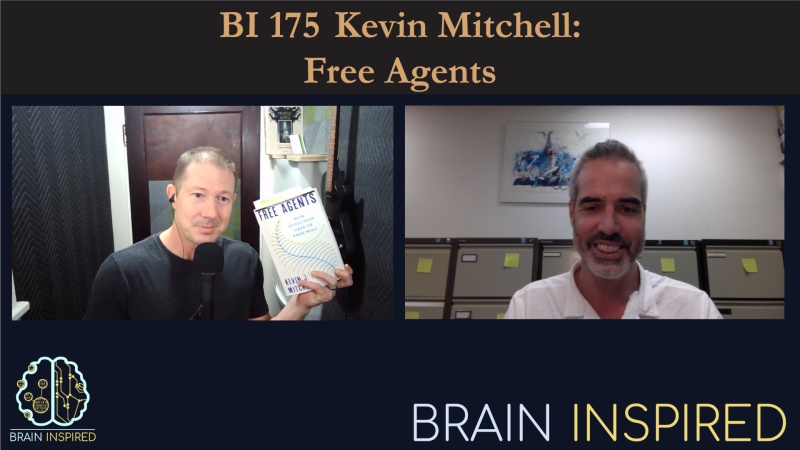
Kevin Mitchell is professor of genetics at Trinity College Dublin. He’s been on the podcast before, and we talked a little about his previous book, Innate – How the Wiring of Our Brains Shapes Who We Are. He’s back today to discuss his new book Free Agents: How Evolution Gave Us Free Will
In this episode, we discuss many of the topics and ideas in her new book, Context Changes Everything: How Constraints Create Coherence, which makes the thorough case that constraints should be given way more attention when trying to understand complex systems like brains and minds – how they’re organized, how they operate, how they’re formed and maintained, and so on.
ustin Wood runs the Wood Lab at Indiana University, and his lab’s tagline is “building newborn minds in virtual worlds.” In this episode, we discuss his work comparing the visual cognition of newborn chicks and AI models. He uses a controlled-rearing technique with natural chicks, whereby the chicks are raised from birth in completely controlled visual environments.